Professional sanitation and food safety professionals in Brampton assist food establishments, food centers, bakeries, warehouses, and mobile food services maintaining standards. They decontaminate regularly touched surfaces, food preparation surfaces, equipment, floors, drains, restrooms, and food handling spaces with approved chemicals, maintaining proper ratios, and documenting contact times. You require scheduled cleaning determined by hazard level, food throughput, food allergies, and inspections, plus documented proof that support Hazard Analysis Critical Control Points, audits, and regulatory adherence. The sections below explains what strong sanitation programs must contain.
Essential Summary
- Sanitation experts from Brampton support restaurants, grocery departments, commissaries, warehouses, bakeries, schools, mobile vendors, and allergen-sensitive operations.
- Sectional methods sanitize high-touch surfaces, food-contact equipment, kitchens, floors, drains, restrooms, and storage areas for reducing cross-contamination.
- Qualified providers confirm proper chemical concentration, suitability, and exposure duration, then record conclusion with checks, audits, and action records.
- Cleaning timelines should follow hazard, production rate, format changes, spills, and regulations, with everyday, recurring, and seasonal tasks distributed by section.
- Opt for contractors with HACCP, public-health, competency, safety training, education, coverage, testimonials, color-coded implements, and compliance-ready sanitation files.
Food Safety Cleaning Requirements for Brampton Facilities
Brampton facilities that process, store, prepare, package, or distribute food require hygiene cleaning. Implement it if your business is covered by public health inspections, food codes, or HACCP requirements. The rule covers eateries, dining facilities, warehouses, supermarket areas, meat counters, fish departments, retail outlets, and institutional kitchens.
Proper hygiene protocols continues to be essential in supply warehouses, processing plants, freezer locations, commercial bakeries, school food programs, reception facilities, and food delivery centers. Seasonal and mobile businesses matter as well, such as mobile kitchens, market vendors, and seasonal booths. Your location needs recorded sanitation procedures when your workers handle raw materials, divide prepared dishes, warm meals, or keep allergens stored. In Brampton, food safety is not discretionary; it constitutes statutory, functional, and public health adherence.
What Services Do Brampton Cleaning Experts Provide?
You need cleaning experts who disinfect frequently contacted areas, kitchens, floor surfaces, and bathrooms to meet food safety and public health standards. They focus on these spaces because they present the highest risk for contamination spread, slip hazards, and sanitation breaches.
Knowing their service areas allows you to confirm your operation's sanitation satisfies operational demands and regulatory compliance.
High-Touch Surface Cleaning
determine how frequently each surface is sanitized
via replacing towels, implementing directional systems, and organizing disinfection tools separate by area
Cooking Zones, Walking Surfaces, and Restroom Environments
Expect Brampton cleaning experts to target kitchens, floors, and restrooms because each area carries unique foodborne illness prevention, slip-and-fall, and public health risks. In industrial kitchens, you need grease removal from cooking stations, appliance surfaces, drain systems, preparation areas, and backsplashes to reduce bacterial growth and pest activity.
Floor care that is recorded should also be anticipated. Technicians scrub and extract buildup from tile grout, ceramic surfaces, and vinyl floors, then apply suitable dehydration methods so you can limit falls and maintain code-compliant conditions. They also address entryways where moisture and debris migrate indoors.
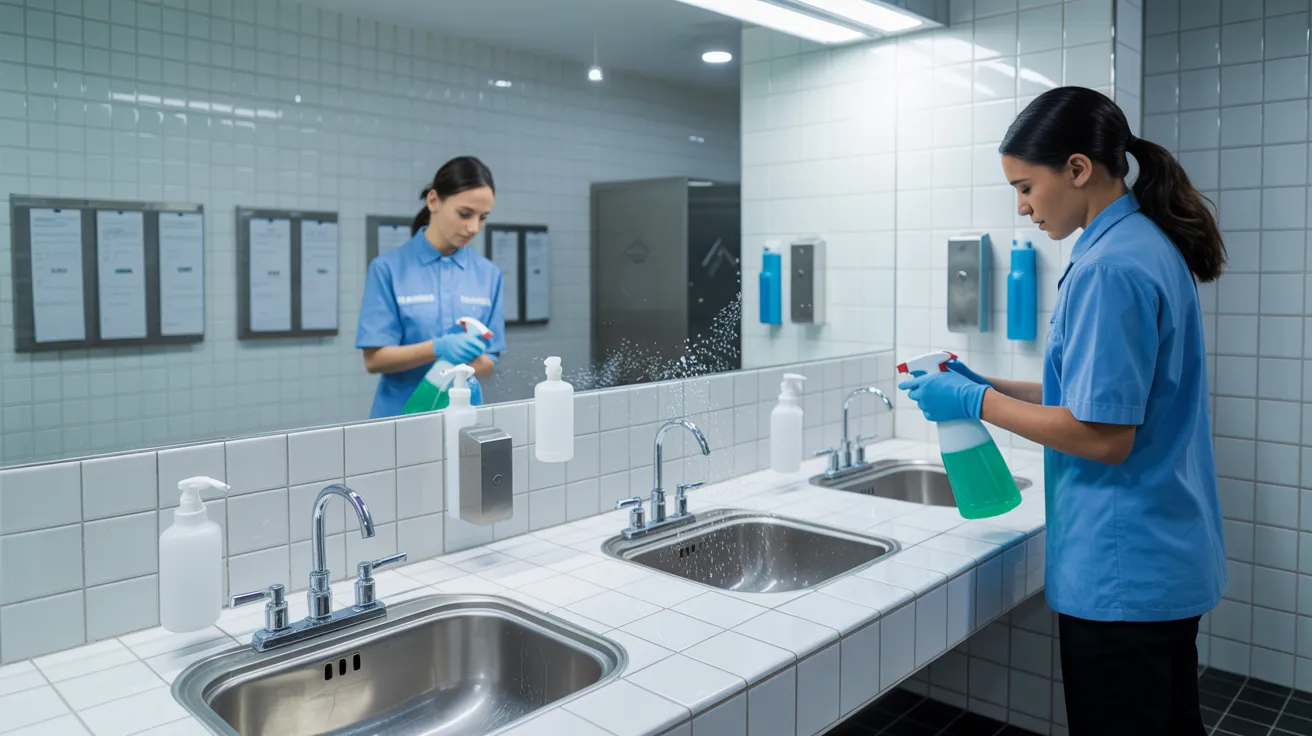
In restrooms, cleaners disinfect touchpoints, fixtures, partitions, dispensers, and waste containers then refill supplies and eliminate odor. They also service restaurant moprooms, where chemical storage, sink hygiene, and drainage conditions can affect sanitation compliance and staff safety daily.
The Importance of Food Safety Cleaning in Brampton
Brampton businesses need to establish food-safe cleaning standards for satisfying health code requirements and obtaining approval. You also reduce bacterial spread through proper cleaning of food-preparation surfaces, appliances, and frequently-touched items. Most importantly, you safeguard community wellness by reducing the chance of food poisoning in your establishment.
Food Safety Regulations
Since Brampton food businesses must follow strict public health standards, your sanitation practices directly affects your capacity to satisfy health codes, safeguard diners, and eliminate regulatory penalties. You must maintain clean food preparation areas, verifiable cleaning logs, proper chemical use, and auditable operational standards that correspond to municipal and provincial inspection expectations.
When cleaning standards decline, infractions, corrective directives, reputation damage, and operational interruption from subsequent audits or compliance reviews become concerns.
Contamination Management
Following regulatory requirements depends on your skill in stopping cross-contamination in daily food handling and cleaning. You must separate raw ingredients from ready-to-eat foods, disinfect work areas after use, and store chemicals away from food-contact items. Well-defined guidelines decrease contamination chances and promote steady regulatory adherence.
You might establish allergen separation to stop main allergens from reaching common areas, containers, or review this content machinery. Use dedicated cutting boards, color-coded tools, and rigorous tool identification so team members avoid blending products throughout cooking or delivery. Enforce washing hands following uncooked meat, fish, egg products, or allergens. Swap cleaning rags frequently, and test disinfectant concentration using strips. When you train staff to follow these controls every shift, you create a cleaner, safer operation that matches Brampton's safety requirements daily.
Community Health Safety
If food safety cleaning declines, you don't merely risk a failed inspection—you boost the probability of foodborne illness affecting customers, staff, and the broader Brampton region. You also undermine your responsibility in protecting public health, especially in busy food facilities where pathogens travel quickly through surfaces, equipment, and touchpoints.
You require sanitation systems that remove contaminants, sanitize effectively, and confirm results. This requires following contact periods, selecting approved disinfectants, documenting procedures, and coaching employees to satisfy health-unit expectations. These measures prevent pathogen control by decreasing microbial counts before contaminating food or hands. Throughout Brampton, strong cleaning protects vulnerable communities, minimizes disease potential, and demonstrates accountability. When you follow proper protocols, you go beyond requirements—you mitigate risk and facilitate secure food handling throughout the area.
How Can Cleaning Practices Ensure Food Safety Compliance?
Upholding rigorous cleaning routines bolsters food safety compliance by lowering contamination exposure, controlling pathogen growth, and positioning your facility in accordance with sanitation requirements under HACCP-based programs and public health regulations. You confirm that food-contact surfaces are visibly clean and microbiologically controlled, facilitating documented preventive controls and inspection readiness.
Effective cleaning also enhances allergen management by clearing residues that can trigger undeclared allergen exposure. by eliminating residues that can cause undeclared allergen exposure.
When Should You Arrange Commercial Cleaning?
Plans for cleaning perform best when created based on risk assessment, output volume, and compliance standards instead of just a fixed calendar.
Drains, vents, storage racks, and hard-to-reach equipment zones call for weekly or every month cleaning, informed by inspection results and sanitation documentation.
Selecting the Right Brampton Cleaning Experts: Key Considerations
Evaluate providers first by sanitation compliance standards rather than price alone. You must ensure each provider understands CFIA, public health, and HACCP-aligned expectations for your business. Request insurance proof, WHMIS compliance, staff training documentation, and supervision methods. Check technician awareness of contamination prevention, chemical safety, and documented sanitation practices.
You should also assess business dependability and accountability. Request references from food facilities in Brampton, then examine turnaround periods, corrective actions, and communication standards. Confirm the company participates in supplier audits and can present inspection-ready documentation when regulators or third parties request evidence. Check whether equipment is maintained is performed, color-coded implements are used appropriately, and facility-specific risks are recognized. A competent service protects regulatory adherence, product integrity, and your brand reputation.
What's covered in a Food Safety Cleaning Plan?
Create a written plan that clearly outlines every sanitation task, standard, and responsibility prior to beginning production. You should list cleaning frequencies, approved chemicals, dilution rates, contact times, tools, and verification methods for each area, section, and machine. Be sure to include pre-operational inspections, corrective actions, and employee training requirements.
Your program should also address cross-contamination controls, waste handling, pest-prevention measures, and documented schedules for bathrooms, drainage systems, surfaces, and food-preparation zones. Detail how you'll keep raw and prepared foods apart, enable ingredient tracking, and maintain accurate allergen labeling through validated cleaning between product changes. You should designate accountability, keep signed records, and review results against regulatory standards, HACCP controls, and customer requirements. When gaps appear, update procedures immediately and retrain staff.
Commonly Requested Questions
Are cleaning services offered for overnight shifts in Brampton facilities?
Yes, you can arrange sanitation coverage to accommodate overnight shifts in Brampton facilities. You'll arrange nighttime cleaning around operational schedules, security measures, and staffing requirements. Providers typically map nightshift logistics to minimize interruption, maintain compliance, and record finished work. You should verify arrival timeframes, oversight, lockout procedures, and disposal methods before service begins.
Can Brampton cleaning experts manage hazardous incidents?
Yes, you can discover many Brampton sanitation experts providing spill response options. They handle hazardous incidents, assess dangers, contain affected zones, and initiate rapid cleanup to reduce risk and avoid operational impact. You should confirm timeframes, credentials, safety protocols, and disposal methods. If your facility must meet compliance standards, pick a provider that tracks incidents, adheres to standards, and supports verification.
Do plant-based disinfectants operate safely on surfaces contacting food?
In essence, plant-based sanitizers function safely for food preparation areas provided you source disinfectants approved for food contact that comply with regulatory standards. Confirm exposure duration, dilution rates, and rinse requirements before use. Botanical formulations lower chemical burden, although you need proof of efficacy against target microorganisms. To preserve surfaces without residue, implement precise manufacturer instructions and verify the cleaning agent satisfies food industry regulations.
Can cleaning plans be tailored for production fluctuations?
Certainly, cleaning plans adapt to seasonal variations effectively. Adapt intervals, labor allocation, cleaning agents, and confirmation procedures to correspond with production rhythms while upholding regulatory requirements. Minimize production downtime by organizing sanitation during equipment transitions, peak volumes, and usage cycles. Concurrently update written procedures, training, and monitoring protocols to address transient threats, emerging allergens, or elevated soil levels. Periodic assessments ensure the plan functional.
Are professional cleaning companies providing staff training on hygiene protocols?
Indeed, commercial cleaning providers often offer employee coaching on sanitation best practices. Your team receives training on proper chemical use, exposure durations, preventing cross-contamination, equipment disassembly, and documentation. They typically follow instruction with HACCP, GMP, and CFIA or local public health criteria. Many also execute compliance inspections to confirm standards, identify gaps, and strengthen improvement measures. This supports you in maintain consistent procedures, achieve compliance, and decrease foodborne illness risks on a daily basis.
Conclusion
By collaborating with Brampton food safety and commercial cleaning experts, you aren't simply tidying—you maintain your facility compliance-focused and your practices up to code. From kitchens to processing floors, every sanitized surface and organized space decreases contamination and prevents costly issues. By arranging service at appropriate intervals and adhering to a systematic cleaning protocol, you protect your team, clients, and your standing. In a strictly regulated industry, clean spaces must be prioritized—they're key to business compliance.